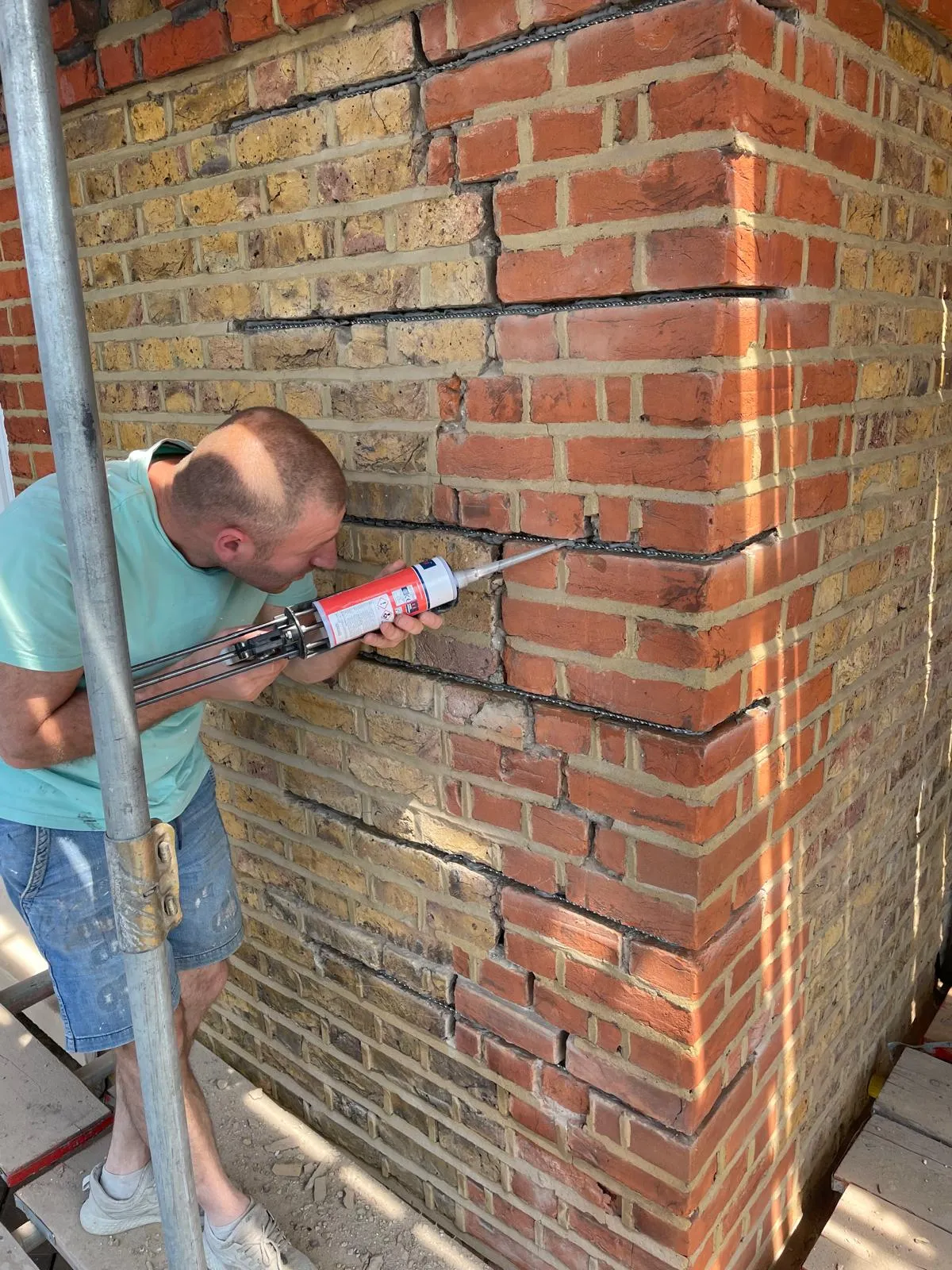

Crack Stitching Explained: When Cracked Brickwork Doesn’t Need Rebuilding
Cracks in brickwork worry owners and managing agents, and for good reason: left alone they let water in and usually get worse. The good news is that most cracked walls on London’s period buildings don’t need rebuilding. Crack stitching can restore their strength for a fraction of the cost. Here’s how it works and when it’s the right fix.
What Is Crack Stitching?
Crack stitching is a repair where slots are cut into the mortar joints across a crack, and stainless steel helical bars are bonded into them with a special grout. The bars spread the load across the crack so the wall acts as one piece again. The joints are then repointed to match, so the repair is barely visible.
Common Causes of Cracking
- Rusting steel: lintels, balcony steels and iron fixings expand as they rust and crack the masonry around them.
- Clay soil and trees: common in north London, where clay shrinks in dry summers and swells in winter.
- Failed lintels and arches: over doors and windows, often shown by stepped cracks above the opening.
- Old alterations: openings widened or walls removed without enough support.
- Thermal movement: long walls and parapets without movement joints.
When Crack Stitching Is the Right Fix
Stitching is right when the movement has stopped and the wall just needs its strength back. If cracks are still growing, the cause, such as subsidence or a failed beam, needs dealing with first, and a structural engineer should assess it. We check this at survey stage and tell you plainly which you have.
Crack Stitching vs Rebuilding
- Cost: stitching is usually far cheaper than taking down and rebuilding a section of wall.
- Disruption: most repairs take a day or two per elevation, with no need to remove windows or prop the wall.
- Appearance: the original brick stays in place, which matters on period buildings and in conservation areas.
What We Do on Site
- Record and photograph each crack and measure its width
- Check for causes like rusting steel or failed lintels
- Cut slots, install helical bars and grout them in
- Repoint in mortar matched to the existing joints
- Photograph the finished repairs for your records
Frequently Asked Questions
Is crack stitching a permanent repair?
For movement that has stopped, yes. It’s designed as a long-term structural repair. Active movement needs its cause fixed first.
Will I see the repair?
Very little. The bars sit inside the mortar joints and are hidden by repointing matched to the surrounding brickwork.
Does crack stitching need building control approval?
Straightforward stitching repairs usually don’t, but larger structural work may. We’ll advise at survey stage.
Cracks in Your Building?
We carry out crack stitching and masonry repairs across London, including Hampstead, Maida Vale and Notting Hill. Call 020 7971 1264 or request a survey.